

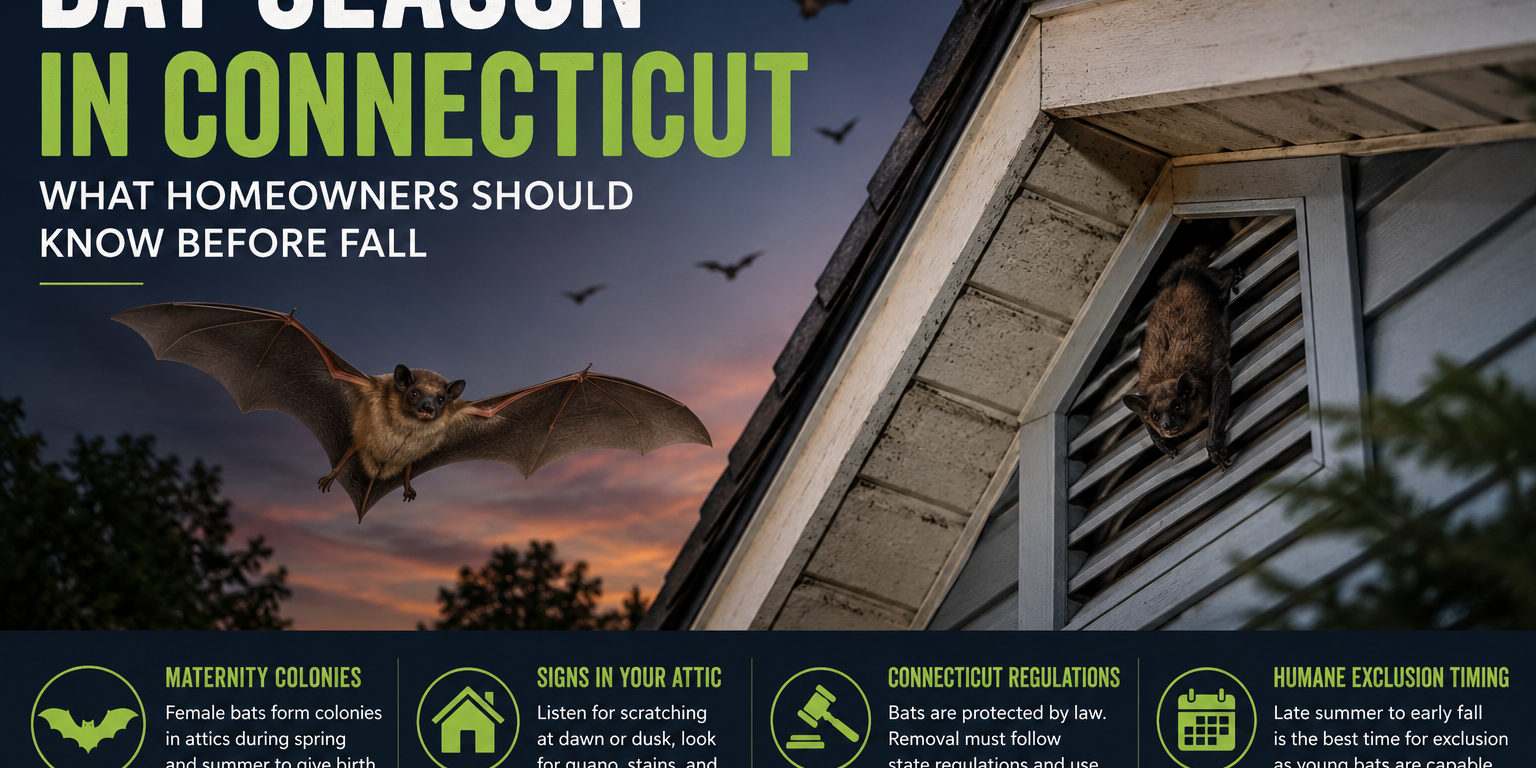
As summer begins to wind down in Connecticut, many homeowners start noticing increased bat activity around their homes. While bats play an important role in controlling insect populations, they can become a problem when they move into attics, soffits, or wall spaces. Understanding bat behavior during late summer and early fall can help homeowners address issues before they become more serious.
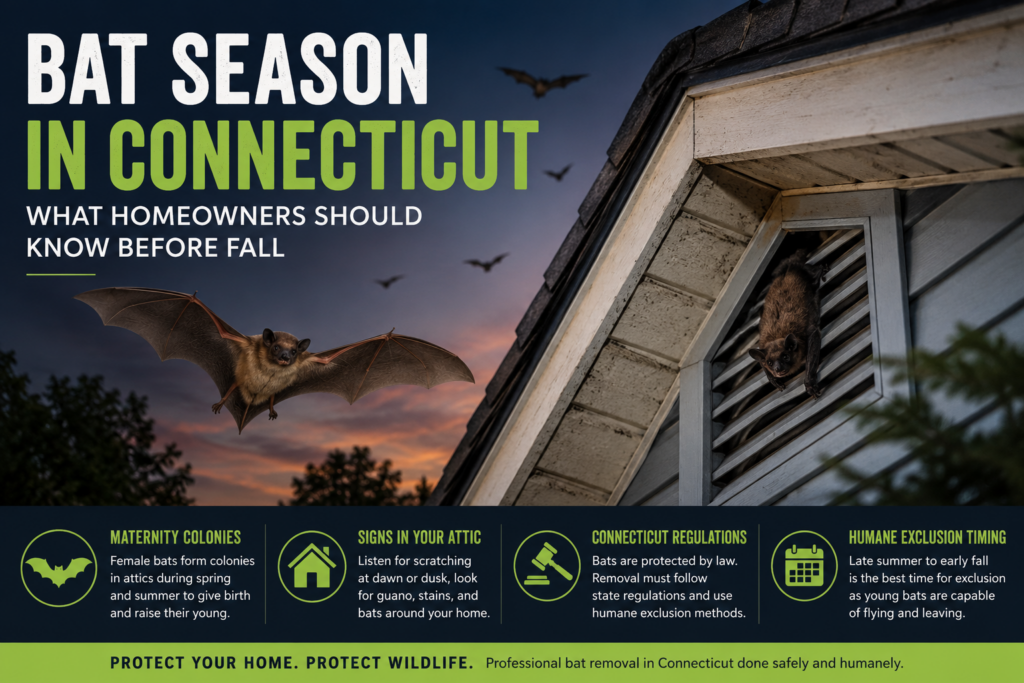
One of the most important factors to understand is the presence of maternity colonies. During the spring and summer months, female bats gather in attics and other sheltered spaces to give birth and raise their young. By late summer, the young bats are becoming independent and preparing to leave the colony, making this a critical time for evaluating potential bat problems.
 Some common signs of bats in your attic include:
- Scratching or fluttering sounds, especially at dusk or dawn
- Bat droppings (guano) near attic openings or around the exterior of the home
- Staining around roof vents, soffits, or gaps where bats enter and exit
- Bats seen flying around your roofline in the evening
Homeowners should also be aware that Connecticut regulations protect bats, and removal must be performed using humane exclusion methods. In many cases, bats cannot simply be trapped or removed at certain times of the year due to the presence of dependent young.
Late summer and early fall are often considered the ideal time for humane bat exclusion, as young bats are typically capable of flying and leaving the roost on their own. Professional wildlife specialists can install one-way exclusion devices that allow bats to exit safely while preventing them from returning.
If you suspect bats are living in your home, it’s important to act before colder weather arrives. Professional bat removal in Connecticut can help protect your property while ensuring wildlife is handled safely and responsibly. A proper inspection and exclusion plan can prevent future infestations and give homeowners peace of mind heading into the fall season.


