As temperatures begin to drop across Connecticut, homeowners aren’t the only ones preparing for colder weather. Squirrels, raccoons, mice, bats, and other wildlife start looking for protected places to shelter—and a warm attic, chimney, wall void, or crawl space can be especially appealing.
Taking a few preventive steps in early fall can help reduce the chance of unwanted animals moving in later. If you’re thinking about wildlife prevention in Connecticut, now is the time to inspect your home and address potential entry points.
Seal Wildlife Entry Points Before Cold Weather Arrives
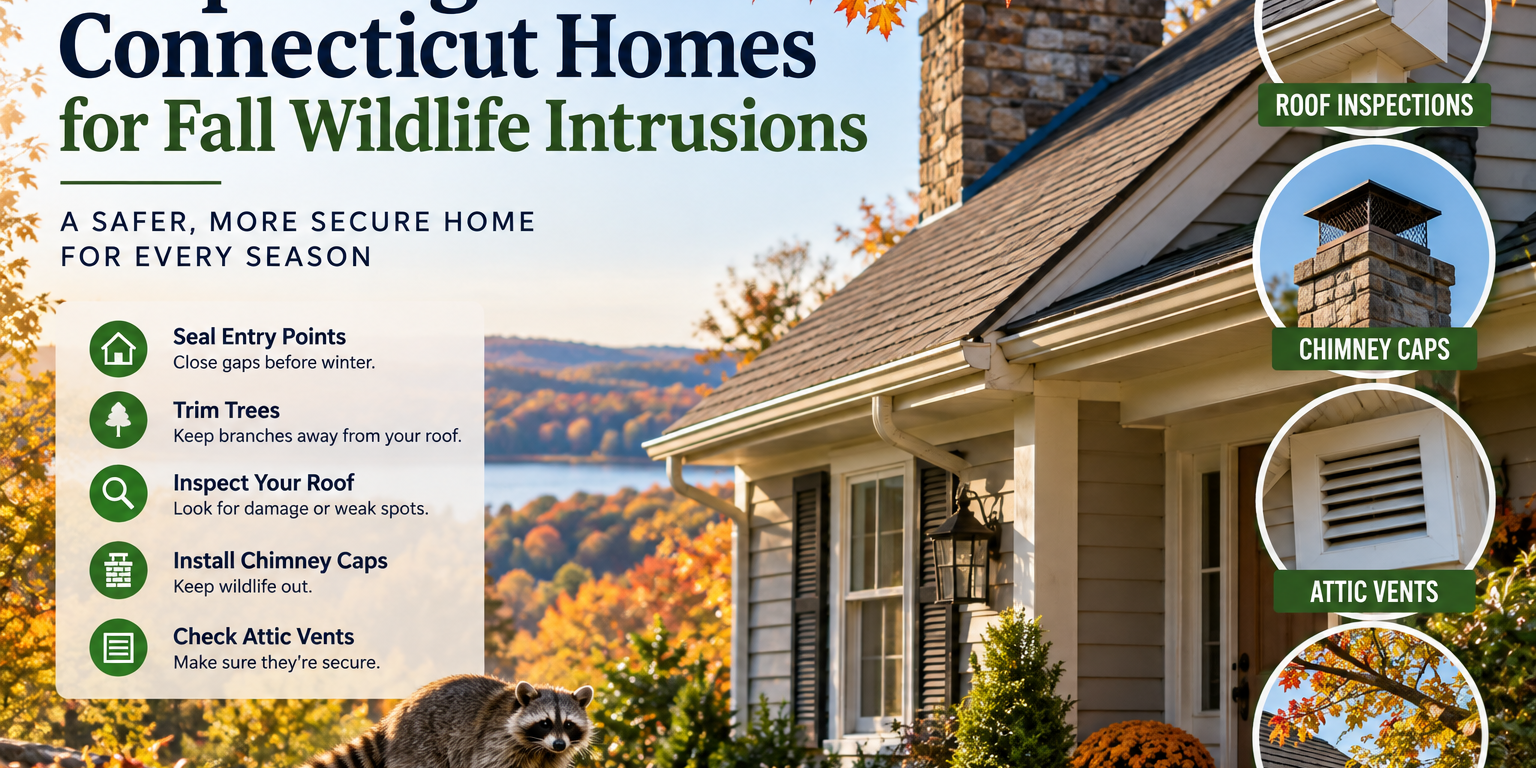
Wildlife doesn’t need a wide-open door to enter a house. Small gaps around rooflines, soffits, siding, foundations, utility penetrations, and other exterior areas can provide access.
Walk around your property and look for damaged materials, loose siding, openings around pipes, or gaps where different building materials meet. However, don’t immediately seal an opening if you suspect an animal is already inside. Doing so could trap wildlife within the structure.
A professional wildlife inspection can determine whether an opening is active before exclusion work begins.
Trim Trees Near Your Roof
Connecticut’s mature trees are beautiful in the fall, but branches extending over a roof can give squirrels and other climbing animals convenient access to the house.
Trimming branches away from the roof can make it more difficult for wildlife to reach vulnerable areas such as soffits, fascia boards, and roof vents. Fall tree maintenance also helps homeowners identify branches that could become a problem during Connecticut’s winter storms.
Check Your Roof for Damage
Summer storms, wind, moisture, and normal wear can leave small vulnerabilities in a roof. Missing or damaged shingles, deteriorating fascia, loose soffits, and gaps near the roofline can all become potential wildlife entry points.
Homeowners throughout New Haven County, Hartford County, Middlesex County, Fairfield County, and Shoreline Connecticut should consider checking these areas before colder weather sets in.
Make Sure Your Chimney Is Protected
An uncapped or improperly protected chimney can provide direct access to your home. Raccoons, squirrels, birds, and other wildlife may investigate chimneys when searching for shelter.
A properly installed chimney cap can help prevent animal entry while still allowing the chimney to function correctly.
Inspect Attic and Roof Vents
Attic ventilation is important, but damaged or unsecured vents can also become wildlife entry points. Check roof, gable, and soffit vents for deterioration, loose screening, or signs that an animal has been chewing or pushing its way inside.
Inside the attic, watch for droppings, nesting materials, disturbed insulation, unusual odors, or scratching noises. These could indicate that wildlife has already entered.
Get Ahead of Fall Wildlife Problems in Connecticut
Preventing wildlife problems is often easier than dealing with animals after they’ve established themselves inside your home.
Since 1993, Anderson Wildlife Control has helped Connecticut homeowners and businesses with humane wildlife removal, exclusion, and preventative services. Our team can identify potential entry points, address existing wildlife activity, and help protect vulnerable areas of your property.
If you’re concerned about squirrels, raccoons, bats, rodents, or other unwanted visitors this fall, contact Anderson Wildlife Control for professional wildlife prevention in Connecticut. An inspection now could help prevent a much bigger wildlife problem this winter.