

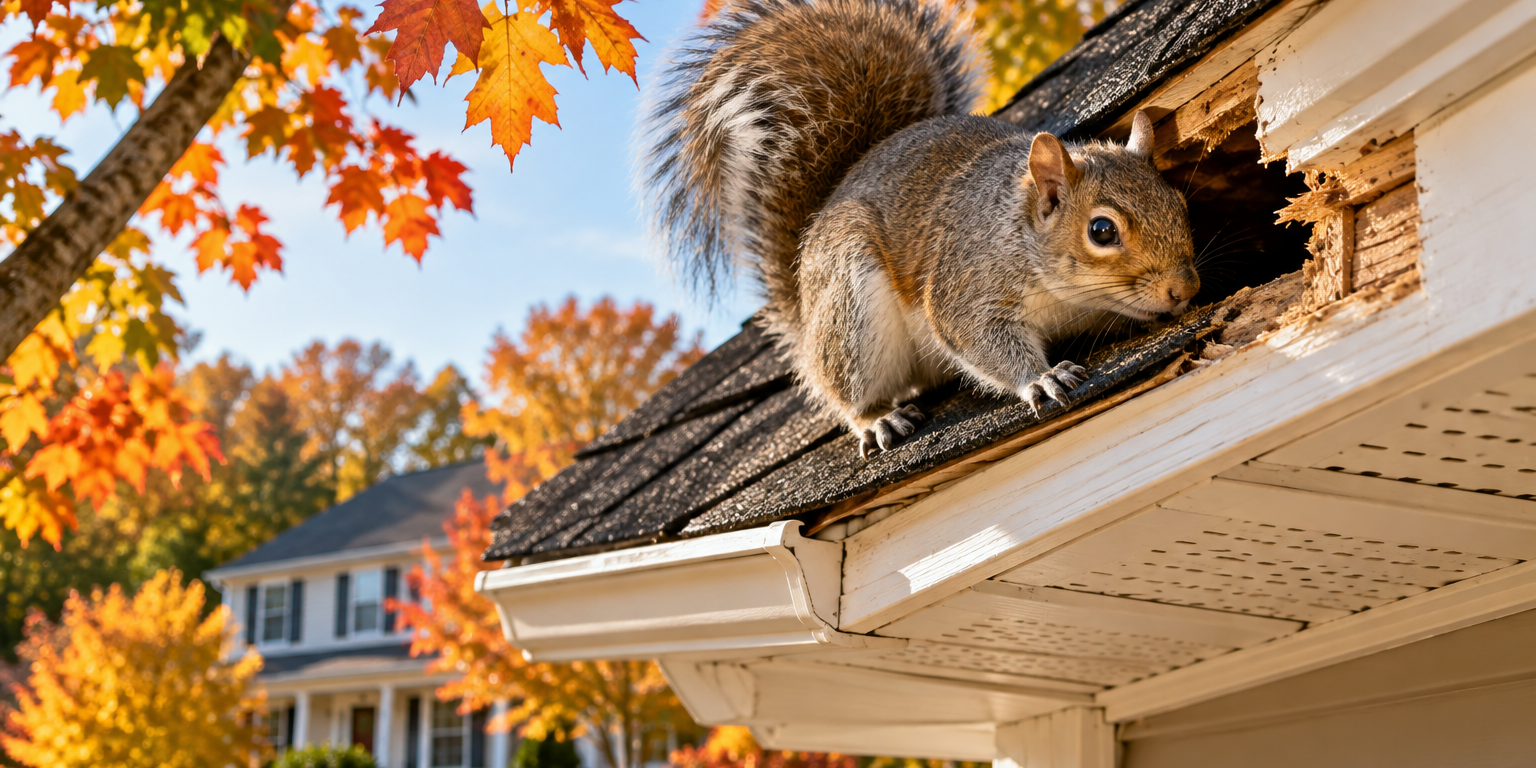
As temperatures begin to drop across Connecticut, squirrels become increasingly active around homes, gathering food and searching for protected places to shelter. Unfortunately, your attic may provide exactly what they’re looking for.
For homeowners in New Haven County, Hartford County, Middlesex County, Fairfield County, and Connecticut shoreline communities, fall is an important time to watch for signs of squirrel activity before small problems turn into expensive repairs.
Why Do Squirrels Enter Attics in the Fall?
Connecticut’s wooded neighborhoods provide plenty of natural squirrel habitats, but residential properties offer additional opportunities for shelter.
As the weather cools, squirrels may investigate attics, rooflines, and other protected spaces. These areas provide warmth, protection from predators, and convenient access to nearby food sources.
Homes surrounded by mature trees are particularly attractive because overhanging branches provide easy access to rooftops.
How Do Squirrels Get Into Connecticut Homes?
Squirrels are excellent climbers and can squeeze through surprisingly small openings. Common entry points include:
- Damaged soffits and fascia boards
- Loose or deteriorating roof vents
- Gaps along rooflines and eaves
- Openings around chimneys
- Areas where squirrels have chewed through wood or weakened materials
Older Connecticut homes and properties with mature trees may have additional vulnerabilities that make wildlife entry easier.
Signs You May Have Squirrels in Your Attic
Squirrels are generally active during daylight hours, making scratching or scurrying noises in the morning or afternoon a common warning sign.
Other indicators include chewed wood, disturbed insulation, droppings, nesting materials, and visible openings near the roof.
Once inside, squirrels can damage insulation, chew electrical wiring, and weaken wooden building materials. Damaged wiring can also create potential fire hazards.
Why You Shouldn’t Seal Entry Points Immediately
Discovering an opening in your roof might make sealing it seem like the obvious solution. However, closing an entry point before confirming that all animals have left can create bigger problems.
Trapped squirrels may cause additional damage while attempting to escape. If young squirrels are present, separating them from their mother can create further complications.
Professional wildlife removal specialists can inspect the property, identify active entry points, and determine an appropriate humane exclusion approach.
Professional Squirrel Removal in Connecticut
Since 1993, Anderson Wildlife Control has helped Connecticut homeowners and businesses address unwanted wildlife safely and humanely.
Our professional squirrel removal Connecticut services focus on identifying wildlife activity, resolving the immediate problem, and helping prevent future intrusions through exclusion and repair work.
Whether you’re hearing scratching in your attic or noticing damage along your roofline, addressing the issue early can help protect your home before winter arrives.
Concerned about squirrels in your Connecticut attic? Contact Anderson Wildlife Control at 203-592-2359 to schedule a consultation and discuss humane squirrel removal and prevention solutions.


